Showing posts with label sequencing. Show all posts

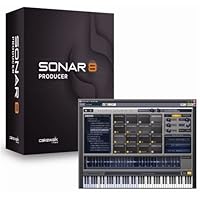
Sonar 8.5 Producer Edition Review

Sonar 8.5 Producer Edition
Average Reviews:

(More customer reviews)
I've been a Cakewalk user for years, starting with their Pro Audio software and dating to when the company was known as 12-Tone Systems. Their software has only become better and better as the years have gone by. Sonar has been the best available Windows-based digital audio workstation software for a long time now - to the point where a fair number of producers and studios have migrated to Sonar from Pro Tools, not to mention a steadily increasing string of software and industry awards. (See Cakewalk's site for names, if interested.) And, of course, with Boot Camp, you can run Sonar native under Windows if you have a recent Intel-based Mac - running a Mac doesn't force you into Pro Tools for software at this level.
Be warned - if you are not heavily into audio, audio for video, MIDI, recording, sequencing, effects, looping, mastering, mixing, etc. - and possess the audio domain knowledge that all that entails, as well as a good understanding of the complexities of running full-on audio software from a technical standpoint - you can find yourself overwhelmed by this software, and you will be MUCH better off with Cakewalk's Home Studio version of Sonar. Sonar (particularly Producer) can be enormously complex, but that's not due to any design issues - quite the contrary! Rather, that's because it covers a vast array of audio activities, options, and capabilities. It is possible to use it simplistically, but I'd direct anyone with only those types of needs to simpler software suites.
On the other hand, if you do have the audio and technical knowledge, you'll find Sonar Producer is flexible, powerful, configurable, and responsive. It is also very stable and has been so for many versions now. Be aware that this type of software by its nature (high processing loads, need to control latency, timing control and issues among multiple devices and interfaces, etc.) can be compromised by PC setups optimized for multipurpose use.
The software comes with a terrific package of high-quality effects plug-ins. I've also found Cakewalk to have good customer service - one of the very, very few, in fact, where the response on customer service calls is as good as on sales calls. Cakewalk continues to improve the user interface with Sonar 8. Particularly welcome are edit changes, including multiple-clip edits, and optimizations targeted at running high track counts. Several instruments are included, and I'm particularly happy to see Dimension Pro, which includes Garritan Orchestral sounds, and TruePianos Amber. Your interests and activities will differ, of course (mini are Midi-heavy), and you should really look through the complete list of enhancements on Cakewalk's site. Enhancements for this version runs several pages long. This is a major upgrade from Sonar 7.
I do have one issue with Cakewalk, though I'm not knocking down the rating because of it as the software itself is too good. The problem is that Cakewalk hits their user base pretty hard on upgrade fees. You can pretty much count on having to spend a few hundred dollars per year to keep the software up to date if you take every version and keep your plug-ins up-to-date. I've always felt that companies should upgrade customers from the most recent versions for little or nothing if they have paid for a recent upgrade, at least for a download. There is some price tiering depending on what version you're running, but it's insufficient, in my opinion. At one point I unknowingly purchased an upgrade weeks before a new release - but Cakewalk still charged me the full upgrade price for the new version. That kind of pricing policy doesn't encourage customer loyalty. I understand that this is a minor issue for a pro or a studio, but Cakewalk also has a large installed base for Sonar Producer among non-pros.
My preference would be for Cakewalk to adjust their release approach to one of more incremental releases between major versions. It's far more disruptive to install a new version, taking on the setup and learning issues than it is to install incremental upgrades (Cakewalk does release some patches.). You do get what you pay for, however.
In addition to the software, buy a Sonar book or two, take the tutorials, hit one or two of Cakewalk's roadshows, and join a forum or two. There is a fairly steep learning curve with Sonar as with any other pro-level audio suite, the good news being there is a lot of support out there due to the market's embrace of Sonar.

Click Here to see more reviews about: Sonar 8.5 Producer Edition

Sonar 8.5 Producer gives you what you need for recording, composing, editing, mixing, and mastering. Get innovations that matter, from exclusive features to ignite creativity and perfect tracks, to groundbreaking technologies that keep you in control, all backed by the industry's leading 64-bit audio quality. And Sonar 8.5 delivers the go to production tools you want with the best collection of virtual instruments, mixing, and mastering effects found in any DAW. With unlimited tracks, creative tools, and the most complete delivery capability between other DAWs, Sonar Producer is a cut above and your best choice in a digital audio workstation.

Buy Now

Click here for more information about Sonar 8.5 Producer Edition

Read More...

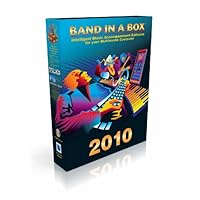
Band-in-a-Box 2010 Pro Review

Band-in-a-Box 2010 Pro
Average Reviews:

(More customer reviews)
I have been using BIAB for years now. I first encountered it maybe 20 years ago and it's been through a lot of revisions and changes, but the basic system is still there. I will warn any anyone getting this that it's a LOT of program you get for your money. Relatively speaking, it's a bargain. First, features:
Key in chords from any piece of music, set a musical style and tempo and away it goes. If you're studying music (any instrument) this is a fantastic practicing too. Find a fake book, key in the chords (BIAB recognizes pretty much everything) and then play along. You can teach your "band" an entire song in minutes. If you're learning improv, this is the tool you want. Back in the day, I would have to record some guitar into a tape player to have something to learn with. Trust me: this is a lot better.
Moving beyond just having a rhythm section, BIAB has two recording tracks, the "Melody" and the "Solo" track. There's really not a whole lot of difference between the two. In fact, there are menu options that simply swap the two. The cool thing about the two track is that either can be automatically generated. You can have a melody generated in a big number of musical styles... that bit rather amazes me. You can also generate what are more like instrument solos than actual melodies and done in the style of various artists. On a whim, I once arranged something for cello and I wanted something that didn't sound like my style of writing or soloing. I generated various solos and picked out the ones I liked best and pieced it all together for the final arrangement. And if you're stuck for ideas, it'll generate chord charts for you which you can use for inspiration.
I read one comment about it seeming unfair that you have to have midi input device to make use of BIAB. Yeah, that's right. A bit like you realy need a flight joystick to use the MS Flight Simulator. Sure, you can use the keyboard, but that's awkward and not really the best way. Same with ANY music program for writing or arranging music: you want some MIDI input device. I recently picked up the AKAI Professional LPK25 Laptop Performance Keyboard for $49 (Amazon was sold out at the time I went to get it) and it's a great little input device. Akai also makes Akai EWI USB Wind Instrument Sythesizer Controller for sax players, but I don't own that. I've got a Yamaha WT-11 (grossly out-dated and the MIDI output tends to be a bit glitchy, so I don't recommend it for MIDI recording). I just checked the reviews for the Akai EWI and it seems to be the right tool, so I guess I need to go buy THAT now. :-) I'm digressing slightly, so let me move on.
Once you start doing the recordings with BIAB, you can turn that recording into an ensemble of up to 4 voices. The numbers of ways to harmonize using BIAB are limitless. You can do duets with tight voicing, 4 voices of trumpet, alto sax, tenor sax and trombone and spread the voicing widely. I can that the BIAB creators read Modern Jazz Voicings: Arranging for Small and Medium Ensembles (Berklee Guide) sometime around 2005 because they added voicings in 4ths which seems to be in vogue with arrangers lately. The software comes with over 200 pre-made harmonies and you can add your own. You can also harmonize the soloist track and practically get an orchestra instantly.
Of course, if THAT isn't enough for you, it'll record audio. Go ahead... sing along. Oh, sounds a bit tame just adding your voice to the track? How about if it automatically harmonizes your singing? It's quite amazing. Of course, if recording is your thing (mine isn't, really, but more about that in a moment), RealBand will create solos using live recordings that sound quite real. Some of the rhythm instruments you can add are live recordings, so none of this synthesized nonsense. And all done to your chord selection in your musical style choice.
Hm... what major things haven't I talked about yet? Actually, I think I only described about 5% of the features. Move on to lyrics, printing, notation, and on and on. Let's talk about realy using this software:
I'm a self-taught arranger. I found BIAB to be an indispensible tool for working out arrangements. I'll give an example of approach. I typically have a mixed crew of trumpets or saxes. I'll also wind up with maybe a flute or clarinet or two. Let's say the ensemble is Tpt, Asx, Tsx, Tbn and I've got 2 flutes and less than 30 minutes to get from a lead sheet to a quick arrangement. In 1-2 minutes I have the chords entered and a musical style chosen. I record the melody and shunt that to the soloist track and assign a 3-part harmony with violin and 2 flutes (violin is the lead vocal strictly to stand out). Now my flute parts are basically done. Back to recording again, but with the horns in mind. Maybe I shoot for just doing some fills for the horns, or maybe I just want long tones. Regardless of style, I'm essentially improvising the top voice. I add a 4-part harmony to the melody track. Maybe I tweak a little or re-record a measure or two so I'm statisfied. Time to accomplish? Maybe 10-15 minutes depending on the length of the song and my fussiness. Last step: hit F6 to export to a MIDI file. I pull that into Finale move the parts to a pre-made template and do final tweaking to any notes that I think could use some help and possibly do some sections of voice dropping (see the Berklee book above for details), add the lyrics, title, etc. And for the last details (if you care) I split the score to parts, print to paper and PDF, export the finalized MIDI file, and run a custom program that automatically e-mails the PDF parts and the practice play-along MIDI to my musicians. We all get together knowing our parts.
It's pretty incredible what's packed into a program with over 20 years of constant updating.

Click Here to see more reviews about: Band-in-a-Box 2010 Pro

Band-in-a-Box Pro 2010 is jam-packed with over 50 exciting new features and enhancements! The award winning Band-in-a-Box is so easy to use! Just type in the chords to any song (like C or Fm7b5), choose a musical style from the hundreds available, and click the [Play] button. Band-in-a-Box automatically generates a full backing arrangement including RealDrums and RealTracks. That's right, LIVE audio recordings of actual musicians. There are some exciting new features in Band-in-a-Box. We've added a new "Plug-in" mode, allowing you to simply Drag-n-Drop tracks between Band-in-a-Box and your favorite sequencer (RealBand, Sonar, Reaper, ProTools, FL-Studio, Nuendo and more). RealTracks generate much faster now, typically 3X faster. RealTracks now support Shots, Holds, and Pushes. Endings are improved, and RealTracks endings are now 4 bars long, giving time for the natural decay of the instruments. Individual MIDI or Real Tracks can be frozen now, so the arrangements can be saved and fixed, and will replay quickly without need for regeneration. Soloist RealTracks are now saved with the song. We added Multiple Undo support, up to 999 levels of Undo. There are new Reverb and Bass/Treble controls for each track, allowing you to add these to individual Real tracks. All settings are now saved with each song. And many more!

Buy NowGet 16% OFF

Click here for more information about Band-in-a-Box 2010 Pro

Read More...

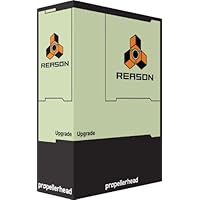
Propellerhead Reason 5 Upgrade Review

Propellerhead Reason 5 Upgrade
Average Reviews:

(More customer reviews)
From my first exposure to Reason (Adapted that came with an audio interface purchase) I've been a devoted Reason lover. In my opinion there's never been a more unique, or software stable, music creation tool. If I lived to be 90 I don't think I could fully realize the potential of this program.
Now with the addition of Record the program is a complete audio workstation. It's difficult for me to separate the two at this point but I believe the two newest features that are part of Reason 5 that I've found useful are the Kong drum designer and the sequencer blocks mode. I've already created a Combinater that takes full advantage of Kong's drum sounds and effects coupled with the step programable features of Redrum, awesome!
The blocks mode within the sequencer is quite helpful for organizing songs into sections but still the only complaint I have with the sequencer is the lack of position markers.
Reason continues to be the most inspiring music creation program I've ever encountered and the bottom line is it's just plain fun to play and experiment with.

Click Here to see more reviews about: Propellerhead Reason 5 Upgrade

Reason is back - bigger and stronger than ever. Version 5 brings the mighty Kong Drum Designer, a much-improved REX loop player, a whole new way of sequencing, live sampling and much, much more.Build and play your beats with Kong Drum Designer's analog drum synths, samplers, rex loop players and physically modeled drums. Use Dr. Octo Rex to build arrangements with chord progressions, fills, and variations. Or use it for some advanced loop trickery.Reason 5 introduces Blocks - a whole new way of building your songs. Blocks lets you create your songs using a pattern based approach. Use one block for the verse and one for the chorus - or build your song around an eight bar beat.Re-explore the lost art of live sampling in the NN-XT, NN19, Redrum, and Kong. Tweak any sample in the new built-in editor. Make your songs self-contained by embedding samples and even ReFill sounds in your file. Collaboration just got even easier.If you own both Reason and Record, this is the upgrade for you!
New in Reason 5Dr. Octo Rex Loop PlayerThe upgraded Dr. Octo Rex loop player loads eight REX loops into one player and lets you switch between them on the fly. This makes arranging a breeze - load the drum loops into one player, the guitars into another and use the sequencer to select what loop to play in a pattern-like fashion.With eight loops to switch between, the new loop player also comes ready for the experimental minded. Set the player to retrig the loops on the beat, on the bar or on the 16th note. Or program the loops manually like in the original rex player.For each of the eight loops, the new rex player also comes with an expanded set of per-slice settings. Set pan, pitch, filter frequency and level, reverse slices, use multiple outputs, create alternating groups of slices and much more.The Reason 5 Factory Sound Bank comes complete with guitar and acoustic drums patches for Dr. Octo Rex and a huge selection of techno, house, club, hip hop and r&b loops from signature sound designers.

BlocksMany musicians tend to think of music in terms like intro, verse, chorus, breakdown, buildup and so on. With the new Blocks mode in Reason 5 and Record 1.5, your sequencer does too.Blocks lets you sequence your songs using a more pattern-based approach, with the segments of your song as individual building blocks to be laid out in your arrangement.Start by creating the discrete parts of your song in blocks mode. When you are ready to start building your song, just switch back to song mode and draw in what blocks should play in the dedicated pattern lane. Use one block for the verse and one for the chorus - or build your song around a single 8-bar loop.Blocks provide a very fast way of creating a musical structure for your song. But the options don't end there. With the basic arrangement laid out, you can see the contents of the blocks and create variations and mute individual parts, or add further musical elements in song mode.A typical use for Blocks is to create your backing track in blocks and then use the song mode sequencer to record vocals or instrumental performances. For music based around a single looped section, one repeated block with automation and mutes of individual tracks added in song mode makes arranging a breeze.You never have to commit to using either mode - you are free to move back and forth between Blocks and Song mode, and any changes you make in your Blocks will instantly be manifested in all instances of that Block. Need some tambourine on that chorus? Add it, and there will be tambourine whenever the chorus block is playing.

Live SamplingRemember the time when samples were something you sampled and not loaded from your hard drive? When a sampler was a machine that could record samples, not just play them back.As samplers became software instead of machines, they came to rely on external sample editing software for recording and editing the samples and the art of spur-of-the-moment creative sampling was pretty much lost. Now we are bringing it back to Reason 5 with its live sampling input.All sample players in Reason are now samplers. Just hook up a sound source to the rack's sampling input and you are ready to start sampling. Use a mic, a turntable, an instrument or the entire Reason mix.Sampling in Reason is simple and straightforward. Hit the sample button and Reason starts sampling. Reason will detect the sample start automatically. You can sample when Reason is running too if you like - no need to stop the music.If needed, bring up the built-in sample editor to set start and end points, loop points and more. This is possible for all loaded samples by the way - not only the ones you have sampled.As always, Reason lets you focus on music making - and sampling in this case. All samples are neatly stored in our song file and accessible in the new samples pane in the tool window. Here you can easily see what samples are loaded into what machine and delete and export samples as you wish.Live sampling together with pitch detection of root key and automatic zone mapping makes it dead easy to sample an instrument and map the samples across the keyboard. This way you'll create your own multi-sampled instruments for NN-XT and NN-19 in an instant.

Kong Drum DesignerAnalog synthesis, physical modeling, sampling, REX loops, support sound generators, effects, flexible routing, multiple hit types and more. The Kong Drum Designer is not your regular drum module. It's the drum module focused on letting you get exactly that drum sound you're after. Kong has 16 pads and 16 drums. Build your drum sounds based on any of the nine different drum modules. Flavor the sound with 11 support generators and effects. Program automation, create alternating groups and let Reason's powerful sequencer control the beat.Reason 5 ships with a sound bank with a generous supply of kits for Kong across a wide variety of styles.

System RequirementsWindows
Intel Pentium 4/AMD Athlon or better (multiple cores highly recommended)
1GB RAM
DVD drive
Windows XP SP3, Vista or Windows 7
2 GB free hard disk space
Monitor with 1024x768 resolution or larger
A 16 bit Windows compatible audio card, preferably with an ASIO driver
A MIDI interface and a MIDI keyboard recommended
Requires any version of Reason or Record Reason Duo
Mac
Intel Mac (multiple cores highly recommended)
1 GB RAM or more
DVD drive
Mac OS X 10.4 or later
2 GB free hard disk space
Monitor with 1024x768 resolution or larger
CoreAudio compliant audio interface or built-in audio hardware
A MIDI interface and a MIDI keyboard recommended
Requires any version of Reason or Record Reason Duo


Buy Now

Click here for more information about Propellerhead Reason 5 Upgrade

Read More...